 Request An Appointment

 CLOSE MENU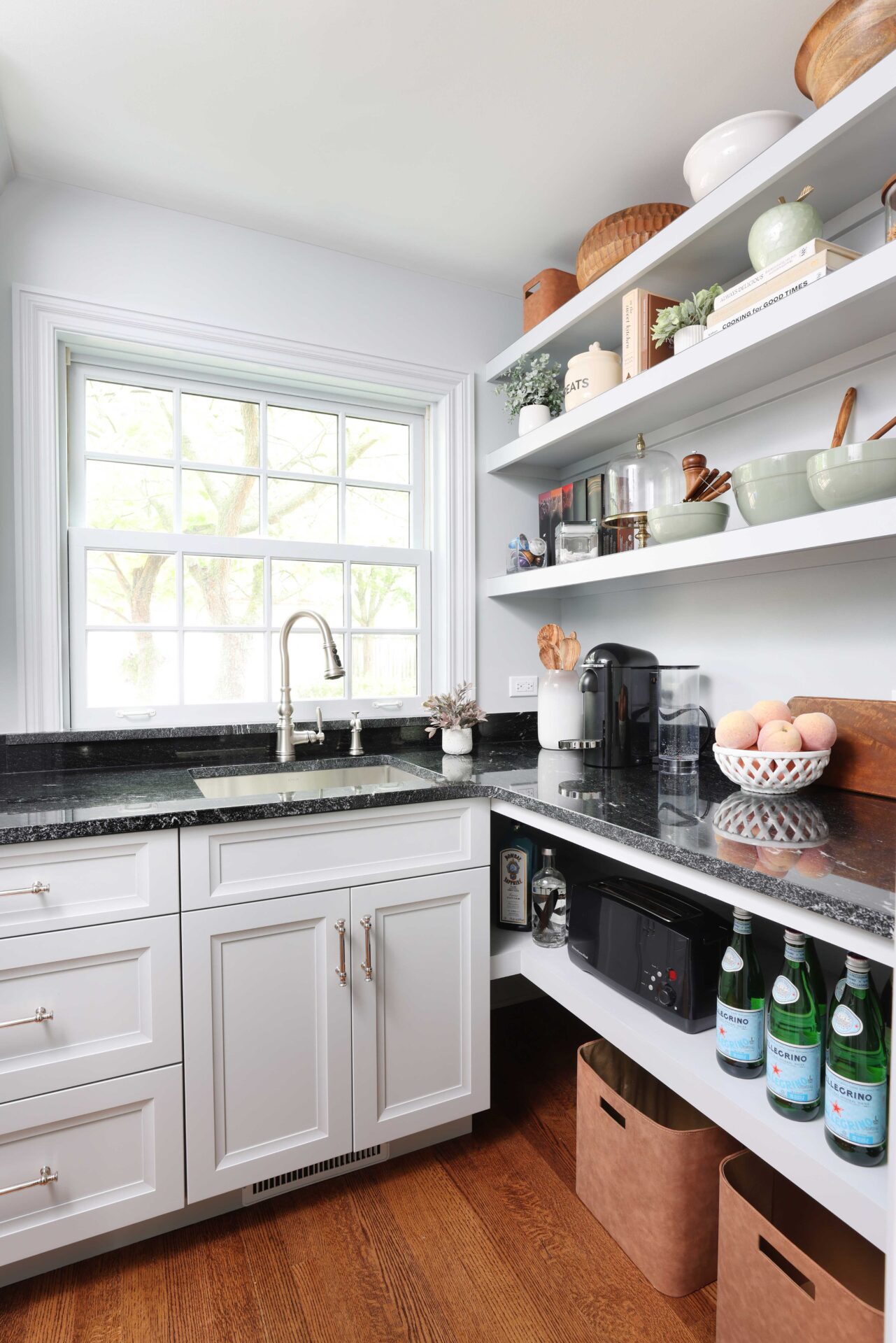
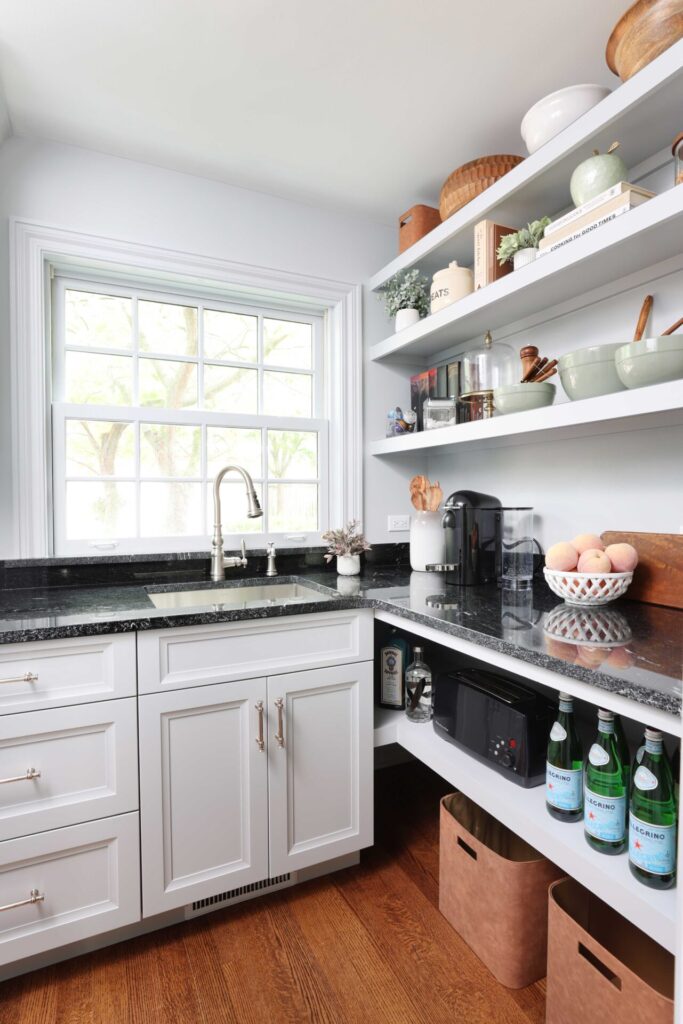 In the world of kitchen design, some obsess over open-concept layouts, large islands, and high-end appliances. Yet, one of the most useful amenities in a home remains the humble walk-in pantry. Tucked just off the kitchen, a well-organized pantry is an important storage hub, keeping clutter at bay and essentials within reach. However, there is one specific feature that can elevate a pantry from a mere utility area to a design masterpiece: a window.
Bring On The Light
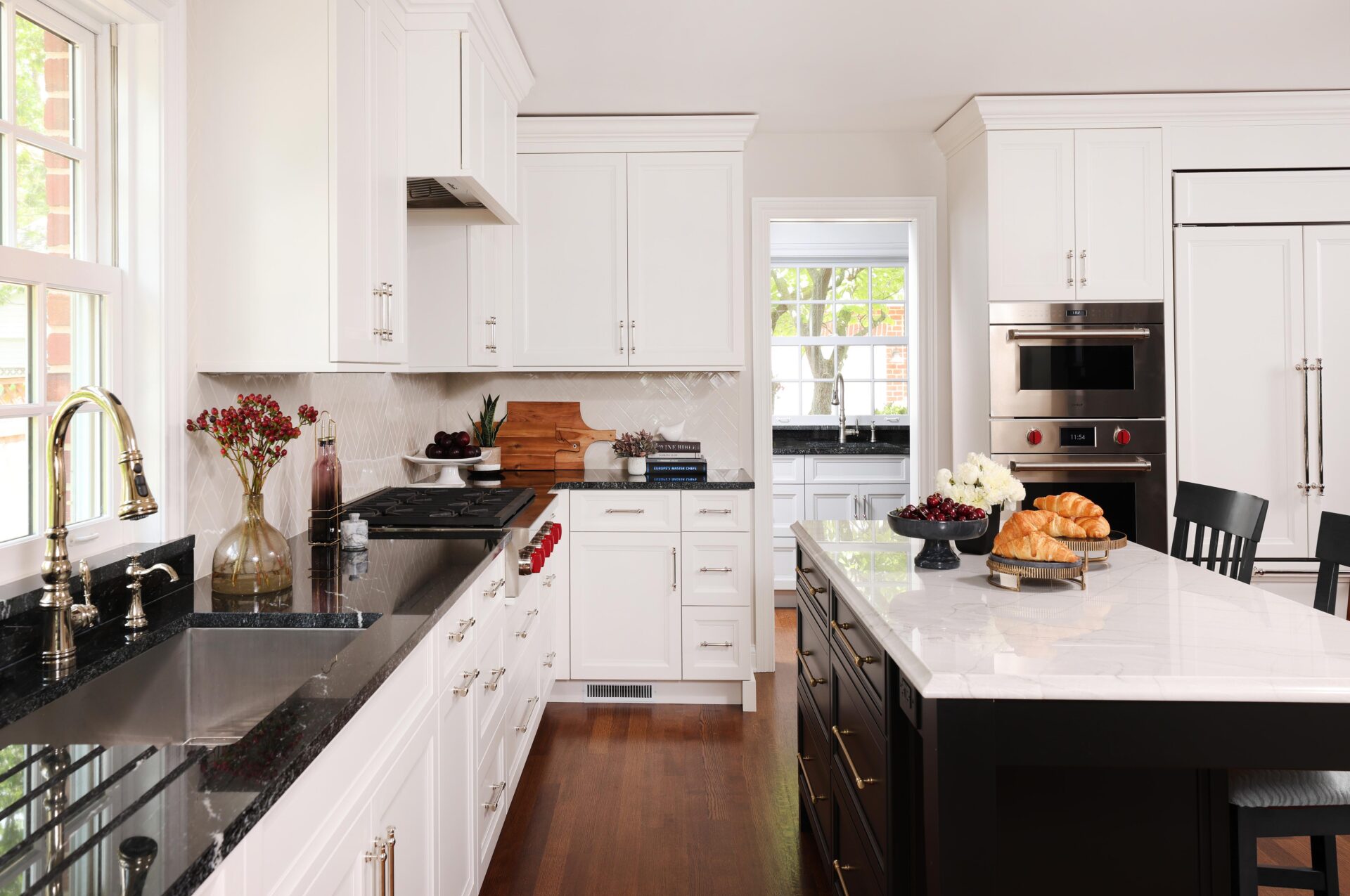
When a pantry has its own window, the entire pantry-kitchen dynamic changes. Historically, pantries were dark, enclosed spaces full of forgotten food and stale air. A pantry window introduces natural ventilation and, more importantly, a flood of daylight. This natural illumination makes the task of organizing dry goods feel less like a chore and more like a moment of connection with the outside world – or at least the light of day.
For Normandy Design Manager Ashley Noethe, the true magic lies in the way this light interacts with adjacent spaces. “Capturing the light in the pantry is a big thing,” Ashley says. “We want to maximize the sense of space by bringing as much light as possible through the pantry and into the kitchen.”
In many floor plans, the kitchen can suffer from dead zones far from exterior walls. A windowed pantry acts as a light funnel, allowing brightness to flow into those dim areas and make the kitchen feel more open and airy.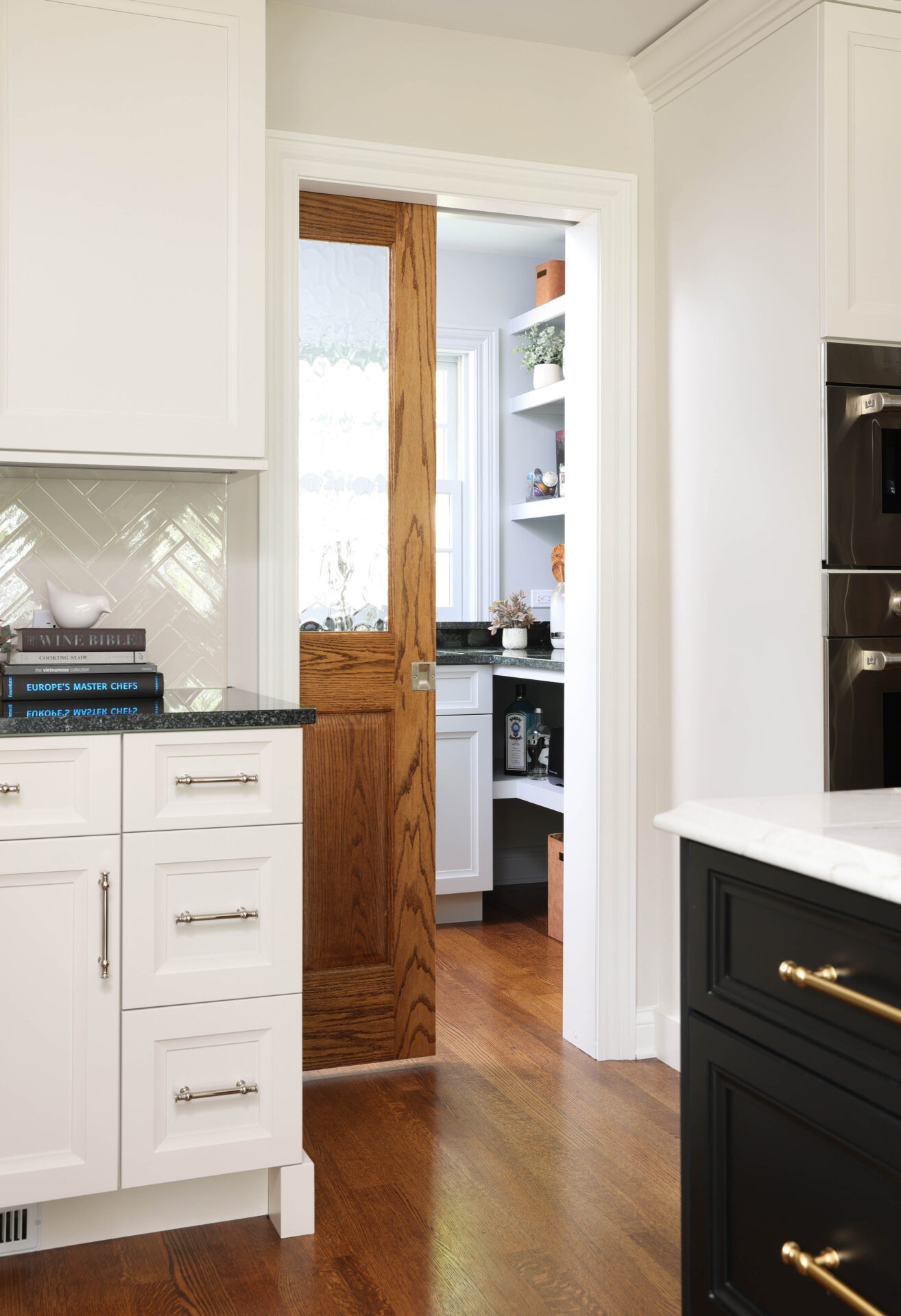
Pantry Door Glass
The quality of the light that reaches your kitchen through a pantry can depend on the style of glass in the pantry door. The doorway between pantry and kitchen is a transition zone, and the door itself acts as a lens for the light passing through it. Three types of glass to consider are:
Clear Glass: This is the best option for brightness. It also creates a line of sight into the pantry, which can make a small kitchen feel larger by extending the visual field into another room. Of course, it doesn’t hide anything.
Textured Glass: A gorgeous alternative that comes in many different varieties. Textures scatter the light, creating a soft, architectural glow while obscuring the inevitable clutter of cereal boxes and flour sacks. “Flemish glass is a beautiful choice for a pantry door,” Ashley says. “It’s textured enough so that you don’t see what’s in there, but clear enough to let the light really shine through.”
Frosted Glass: If you prefer a little privacy for your pantry staples, frosted glass is ideal. It diffuses the light as it passes through, gently brightening the kitchen without revealing what’s on your shelves. Sometimes frosted glass itself can be decorated with special etching or gilding.
Best Of Both Worlds
Ultimately, a pantry with a window provides a unique architectural luxury: visibility without intrusion. It allows the kitchen to benefit from extra space and extra light, and – with the right pantry door – keeps the behind-the-scenes work of the home out of sight.
When you stand in a kitchen bathed in the secondary glow of a pantry window, the room feels more breathable. It removes the claustrophobia of solid walls and replaces it with a sense of openness. “It serves a practical purpose, and it gives the space a unique character you couldn’t achieve any other way,” Ashley says.
Whether you are designing from scratch or renovating an older home, don’t underestimate the power of a pantry window – it might just be the brightest idea you have for your kitchen.
The award-winning designers at Normandy Remodeling offer thoughtful design solutions and stress-free renovations that will highlight your personal style and bring out your home’s full potential. Reach out for an appointment, find inspiration in our photo gallery, or see the latest tips and trends on Instagram, Facebook or Pinterest.