
 Request An Appointment
 CLOSE MENU
  Blog
Blog Unlocking the Charm and Utility of Cabinet Latches
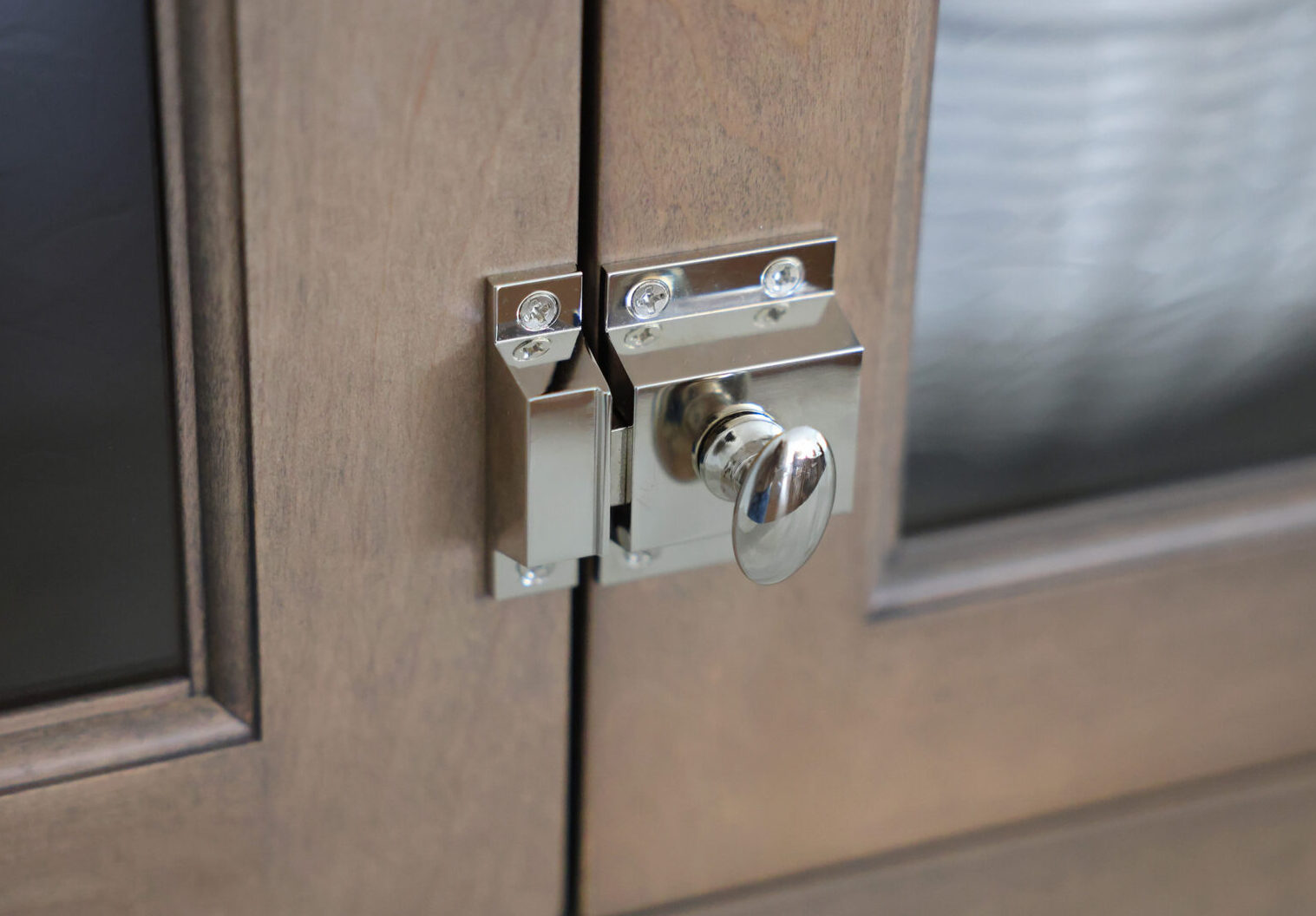 Believe it or not, cabinet latches do far more than keep your doors shut. In a thoughtful home renovation, these small pieces of hardware can bridge the gap between everyday practicality and refined aesthetics.
“Cabinet latches bring a nice mix of tradition and style when used in the appropriate places,” says Normandy Designer Bill Peterson. “They can even create a sense of authenticity. I’ve used them in my own kitchen to create a special cabinet that feels more like a piece of collected furniture.”
While standard cabinets often rely on simple closures, certain storage areas require latches. For example, you may want added security for cabinets containing pet food, alcohol, medications, or household cleaning supplies. Display cabinets holding precious glassware, heirlooms, or collectibles may also benefit 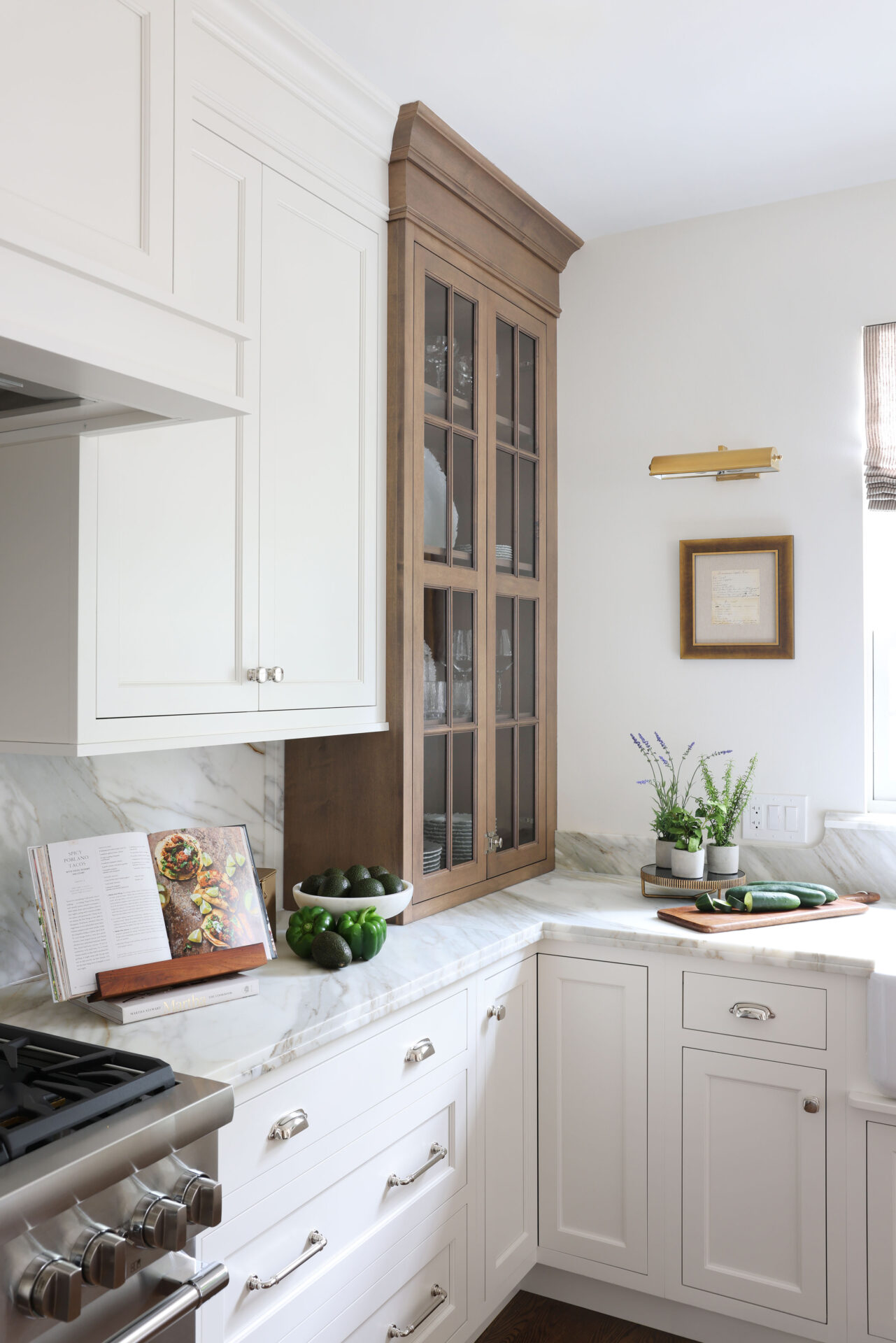 from an extra layer of protection.
Usability is an important consideration. You want a latch that provides help rather than a hindrance, especially if you live with a loved one who is aging, recovering from an injury, or navigating a physical disability. “You can’t just like the look – you must consider the use or functionality of it,” Bill points out. “It takes dexterity to operate a cabinet latch.”
One more thing a cabinet latch can offer is the opportunity to enjoy your space a little bit more. “It creates a moment with the user, since you have to stop and think about the operation of the latch,” Bill says. “It creates a more conscious interaction with the cabinetry.”
Advantages and Benefits
Whether you are remodeling a kitchen, upgrading a pantry, or restoring a vintage piece of furniture, cabinet latches offer a unique blend of security, organization, and style:
Uncluttered Appearance – Cabinet latches hold cabinet doors firmly in place, keeping items tucked away and maintaining a clean, streamlined look throughout your space.
Built-in Safety – Doors that are visibly secure protect curious children and pets from reaching sensitive items while signaling to everyone else that a cabinet is off-limits.
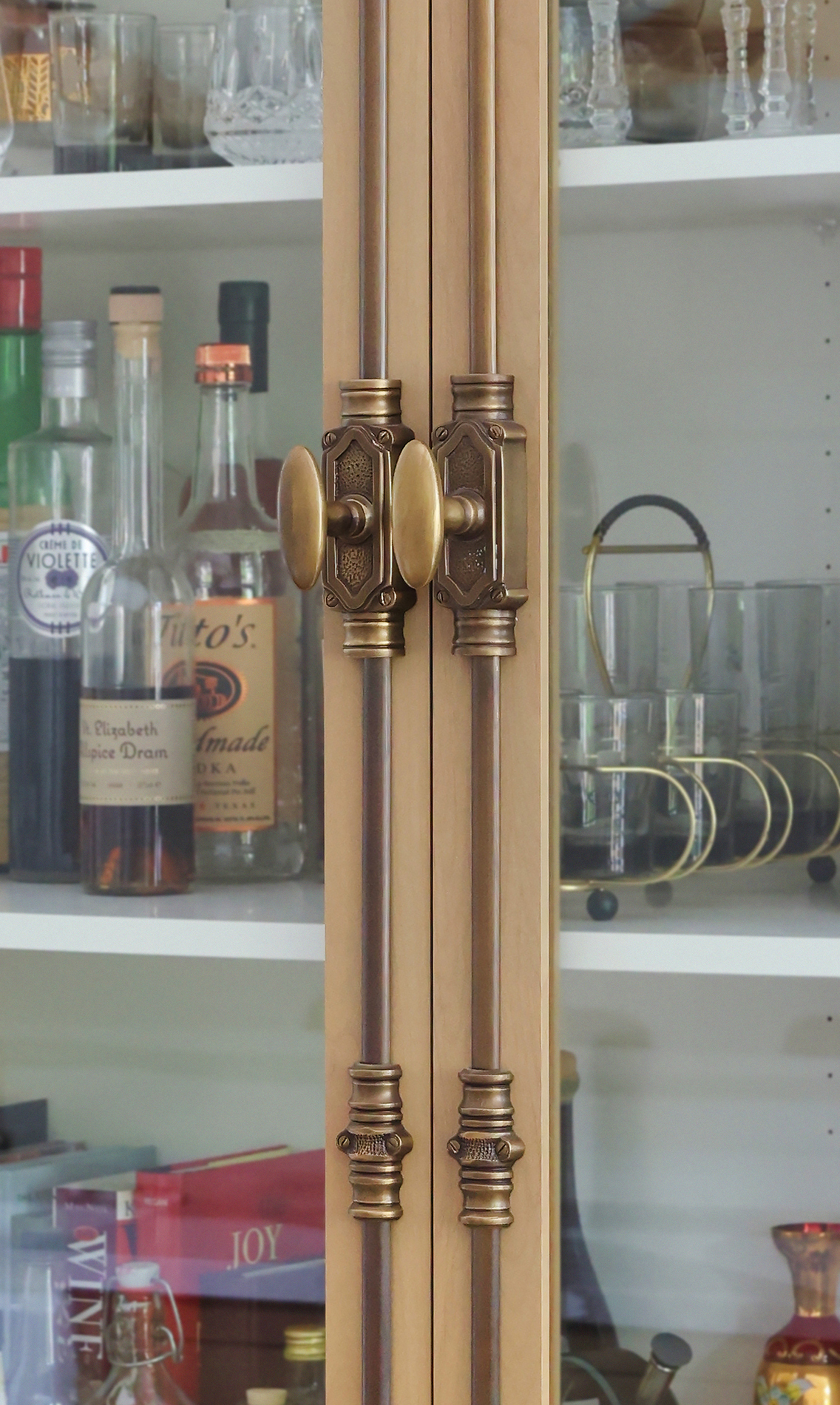
Hands-on Appeal – Chunky hardware offers a satisfying, tactile feedback that adds instant character to traditional or vintage-inspired cabinetry.
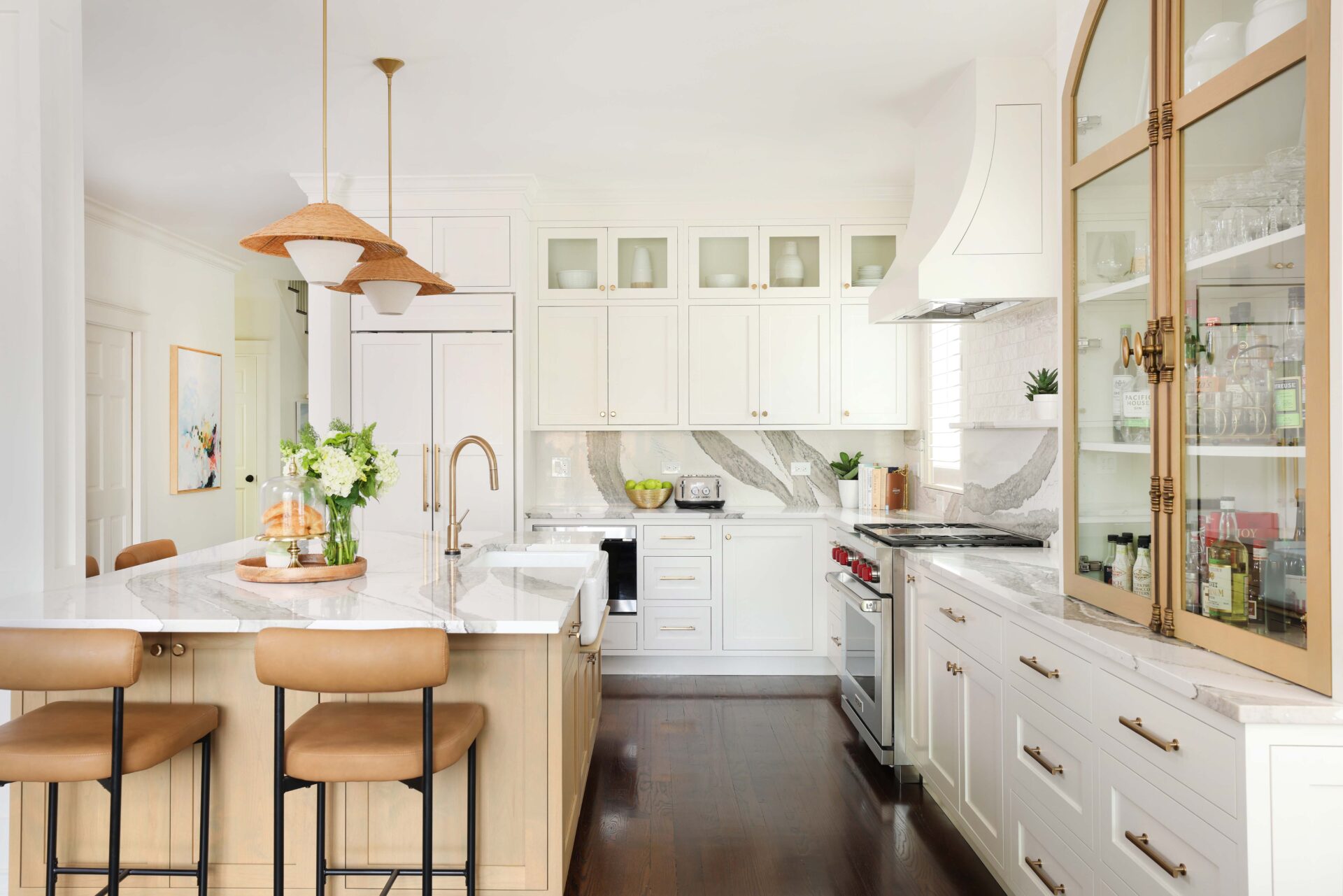
Curated Aesthetic – Sometimes called “jewelry” for your cabinetry, cabinet hardware comes in an astounding number of styles – and selecting the perfect latch adds another layer of detail that elevates your overall hardware palette. “Ordering all of the hardware from the same manufacturer helps ensure a consistent look,” Bill says.
Common Types of Latches
Choosing the right cabinet latch depends on how much security and operational force you need:
| Latch Type | How It Works | Security Level | Best Use Case |
Magnetic |
A basic magnetic join holds doors shut. |
Low | Low-use, lightweight cabinet doors. |
Touch |
A spring-loaded mechanism that opens with a light push. |
Low | Minimalist cabinets without visible handles. |
Roller |
Features a ball-and-socket mechanism that snaps shut. |
Moderate | Pantry doors and everyday utility cabinets. |
Bolt |
Utilizes a sliding bolt or pin that bridges the doors. |
High (Locking) | Lower cabinets needing strict security. |
Traditional |
Uses a mechanical lever that hooks into a frame catch. |
High (Locking) | Period-accurate or vintage-style cabinetry. |


Installation and Longevity
To ensure your hardware functions smoothly for years to come, keep these maintenance and installation practices in mind:
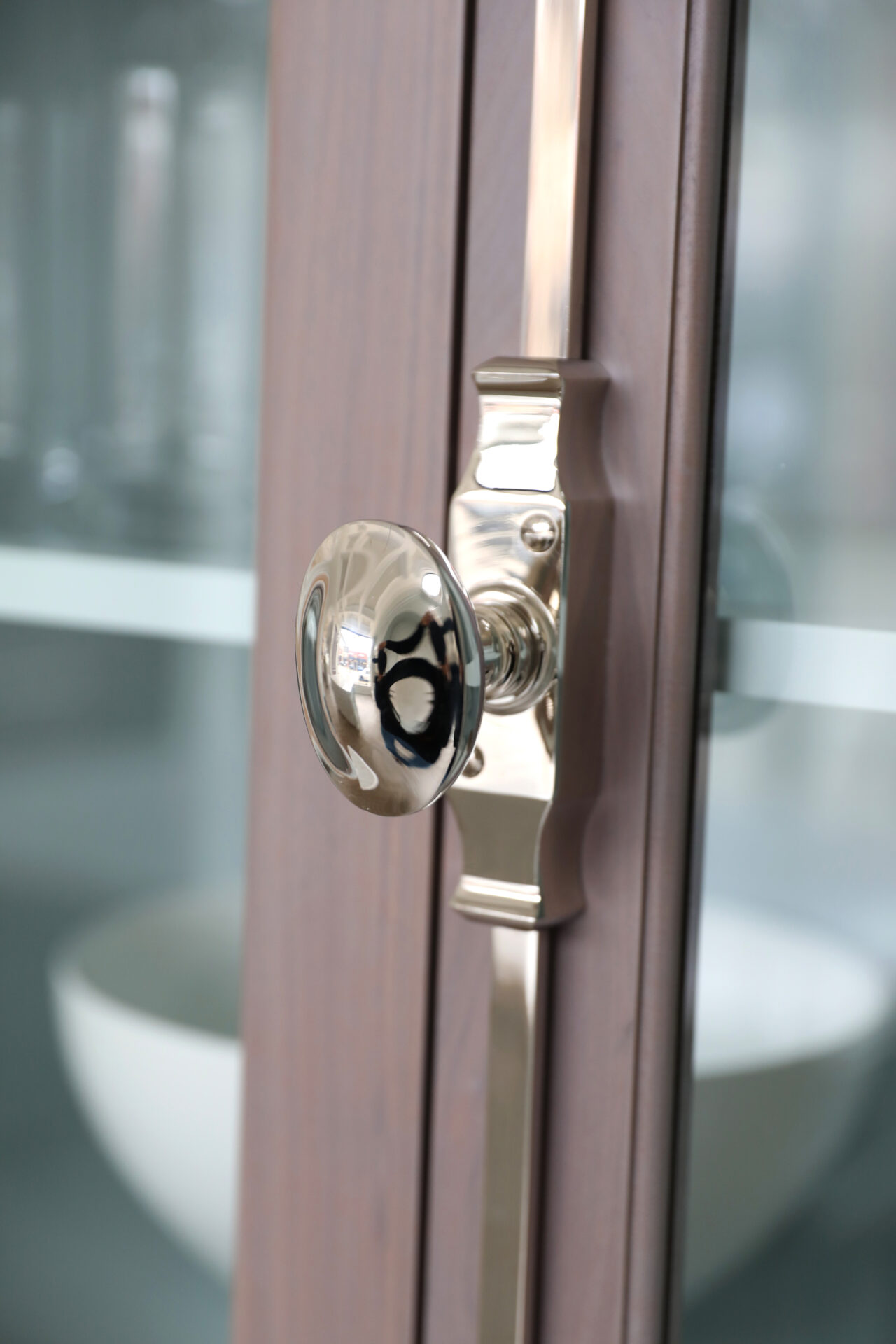
Choose Sturdy Materials – Opt for durable metals like solid brass or stainless steel to prevent mechanical failure and resist long-term wear.
Ensure Precise Alignment – Align both the catch and the latch accurately during installation. Misaligned hardware increases wear and tear and makes doors frustrating to operate.
Avoid Slamming – Hard impacts can loosen mounting screws and misalign mechanical catches over time.
Opt for Locking Hardware As Needed – When securing hazardous items like chemicals or medications, skip basic magnetic catches and install true locking cabinet latches for maximum safety.
If you’re thinking about a major home renovation, Normandy has the expertise you can trust to get the job done right. Schedule a free consultation with a designer. Get inspired in one of our photo galleries. Browse our latest case studies. Or, follow us on Facebook, Instagram and Pinterest.

